
1972–1984: The Disco Explosion
From underground clubs to global domination
1972 – Before the Name
Disco had not yet found its name. There was no mirror ball, no sequined glamour, no dedicated record-store shelves. Yet in the basements, lofts, and bars of cities such as New York, Philadelphia, Paris, and Rio de Janeiro, something unmistakable was beginning to take shape. Marginalized communities were transforming nightlife into spaces of freedom, while DJs experimented with long, uninterrupted sets built around soul, funk, and Latin rhythms.
David Mancuso was hosting his private gatherings at The Loft, creating an atmosphere unlike anything that had come before. Francis Grasso was redefining the role of the DJ, demonstrating that records could be mixed into a continuous musical journey rather than played as isolated songs. Nearby, a young Nicky Siano was watching, learning, and absorbing ideas that would soon influence an entire generation of club culture.
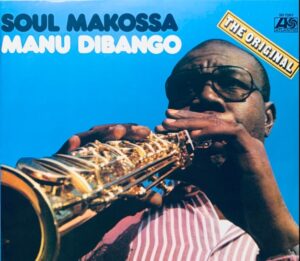
Soul Makossa – Manu Dibango (1972) – Album Cover; Source: www.discogs.com
The soundtrack came from artists including James Brown, Eddie Kendricks, Curtis Mayfield, The O’Jays, and The Temptations, whose soul and politically charged funk laid much of the musical foundation for what would become disco.
One recording, however, stood apart. Released in 1972 by Cameroonian saxophonist Manu Dibango, Soul Makossa introduced an infectious Afro-funk groove built around the unforgettable chant “mama-say mama-sa ma-ma-coo-sa.” Its influence spread rapidly across dance floors and would echo through popular music for decades. Many historians continue to regard it as one of the earliest recordings to embody the spirit of disco.
At this stage, disco was not yet a genre. It was an atmosphere, an instinct, and a new way of experiencing music together.
1973 – When the Underground Starts to Pulse Louder
The lights remained low, but the dance floors were becoming fuller. Across New York, Philadelphia, and Los Angeles, a recognizable culture was beginning to emerge. Although the word disco had yet to enter everyday language, its pulse could already be felt. Following the impact of Soul Makossa, DJs dug deeper into record collections while Philadelphia International Records refined its distinctive orchestral soul sound. In the Bronx, parties expanded from basements into parks, powered by sound systems and stacks of vinyl that kept dancers moving for hours.
David Mancuso continued to develop The Loft as a unique communal experience, while Nicky Siano opened The Gallery, where music became the central purpose rather than background entertainment. Francis Grasso further elevated the craft of DJing, transforming record selection into a form of live performance.
The year also marked an important milestone for dance music. In July 1973, Billboard introduced its first dedicated dance chart, Disco Action Top 30, acknowledging that an entirely new musical culture had become impossible to ignore. Meanwhile, recordings such as Harold Melvin & The Blue Notes’ The Love I Lost, Love Unlimited Orchestra’s Love’s Theme, and the early sessions that would become Lady Marmalade demonstrated that dance music was developing its own unmistakable identity.
Nothing about 1973 felt explosive. Instead, it was a year of accumulation. Piece by piece, groove by groove, disco was constructing the foundations on which the following decade would be built.
1974 – The Spark Before the Flame
By 1974, anticipation surrounded the movement. Clubs were growing more crowded, DJs were becoming local celebrities, and producers were shaping records with the dance floor firmly in mind. The sound was richer, tighter, and increasingly designed to sustain movement rather than simply accompany it.
Tracks such as George McCrae’s Rock Your Baby and Carl Douglas’ Kung Fu Fighting demonstrated that dance music could achieve both commercial success and international appeal. What had begun underground was rapidly entering the mainstream.
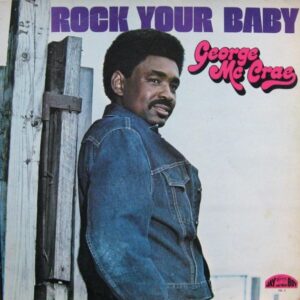
George McCrae – Rock Your Baby (1974) / Record Cover; Source: www.discogs.com
The industry was paying attention. Casablanca Records, founded by Neil Bogart, would soon become one of disco’s defining labels, launching artists including Donna Summer and Village People onto the global stage. At the same time, future pioneers such as Larry Levan and Frankie Knuckles were absorbing the sounds and ideas that would shape the next generation of dance music.
The Loft remained a cultural laboratory, while The Gallery flourished as one of New York’s most influential clubs. Underground gatherings were no longer hidden rituals known only to insiders; they had become essential meeting places for communities united by music, dance, and belonging.
The explosion had not yet arrived, but the fuse was already burning. By the end of 1974, disco had outgrown its origins. It was no longer an underground curiosity, but a cultural force gathering unstoppable momentum.
1975 – The Dancefloor Finds Its Voice
What had begun as an underground movement was now reaching a much wider audience. The sound was more refined, the productions more ambitious, and disco was beginning to produce artists whose names would soon become known around the world.
Gloria Gaynor‘s Never Can Say Goodbye introduced one of the defining innovations of dance music. Side A presented a continuous nineteen-minute mix created for uninterrupted listening, reflecting the way DJs were already building an entire evening around the dance floor rather than individual songs. The album helped establish the extended mix as a defining feature of disco.
KC & The Sunshine Band reached mainstream audiences with That’s the Way (I Like It), while Van McCoy’s The Hustle became an international success and inspired a dance craze that spread well beyond the clubs. In Europe, Donna Summer‘s Love to Love You Baby, produced by Giorgio Moroder, attracted immediate attention with its sensual atmosphere and innovative production. Its American release followed shortly afterwards and marked the beginning of Summer’s rise as one of disco’s defining voices.
Meanwhile, DJs continued to reshape the club experience. Records were extended, layered, and blended into continuous sets that encouraged dancers to remain on the floor for hours. Increasingly, audiences came as much for the DJ as for the records themselves.
By the end of the year, disco had developed its own performers, its own production techniques, and an audience that was growing far beyond the communities where it had first emerged.
1976 – The Glitter Starts to Shine
By 1976, disco had become one of the driving forces of popular culture. Its influence extended beyond music into fashion, graphic design, photography, lighting, and nightlife, creating a visual identity that was immediately recognisable.
Donna Summer continued her remarkable run with Spring Affair, while Chic quietly came together in New York, preparing to redefine the relationship between rhythm, elegance, and groove. The Bee Gees released You Should Be Dancing, offering an early glimpse of the extraordinary success that awaited them.
For many Black, Latinx, and LGBTQ+ communities, clubs remained places where music and self-expression existed side by side. Fashion became more confident, choreography more elaborate, and the dance floor itself evolved into a social space unlike any other.
Disco was also becoming increasingly visible beyond the clubs. Soul Train embraced the new sound, Hollywood cast John Travolta in Saturday Night Fever, Casablanca Records expanded its growing roster of artists, Salsoul Orchestra continued to refine orchestral disco, and the twelve-inch single became the preferred format for DJs because it offered better sound quality and greater opportunities for extended mixes.
Looking back, 1976 stands as the year in which disco established the visual and musical identity that would soon become recognised around the world.
1977 – The World Catches the Fever
During 1977, disco became the dominant sound of international popular culture. Radio stations expanded their dance programming, record stores introduced dedicated disco sections, major labels launched specialist imprints, and nightclubs evolved into destinations that attracted visitors from across the world.
The opening of Studio 54 quickly transformed the club into an international symbol of glamour, celebrity, and excess. Yet an even greater influence arrived at the end of the year with the release of Saturday Night Fever.
John Travolta’s performance, the illuminated dance floor, and the film’s distinctive visual style became cultural landmarks almost overnight. Its soundtrack, driven by the Bee Gees, became one of the best-selling albums in recording history and introduced disco to audiences who had never set foot inside a nightclub.
The Bee Gees dominated the charts with Stayin’ Alive, Night Fever, and More Than a Woman, while Donna Summer released I Feel Love. Produced by Giorgio Moroder, the record combined hypnotic electronic sequencing with disco rhythms and would later be recognised as one of the most influential recordings in the history of electronic dance music. Chic also made their debut with Dance, Dance, Dance (Yowsah, Yowsah, Yowsah), establishing the elegant rhythmic style that would become one of the defining sounds of the late 1970s.
The extraordinary commercial success of disco also brought growing criticism. As the genre became increasingly visible, some dismissed it as overexposed, while others reacted against the social and cultural changes it represented.
None of that diminished its popularity during 1977. Across much of the world, disco had become the soundtrack of the moment..
1978 – Disco at Full Blast
By 1978, disco had reached an unprecedented level of popularity. It dominated radio, television, cinema, fashion, and the record industry. Dance music was no longer a trend confined to clubs; it had become part of everyday popular culture.
Rock artists responded by embracing the sound. Blondie released Heart of Glass, The Rolling Stones recorded Miss You, and Rod Stewart scored a major hit with Da Ya Think I’m Sexy? Even artists associated with glam rock began incorporating disco into their music. Suzi Quatro’s If You Can’t Give Me Love introduced a smoother, dance-oriented production that reflected the changing musical landscape. The influence of disco could now be heard well beyond the artists traditionally associated with the genre.
The Bee Gees continued the extraordinary success of Saturday Night Fever, while Chic released Le Freak, which became the best-selling single in Atlantic Records’ history. Donna Summer strengthened her position with Last Dance and MacArthur Park, Sylvester gave the San Francisco scene one of its defining anthems with You Make Me Feel (Mighty Real), and Gloria Gaynor released I Will Survive, a recording that would become one of the most enduring songs of the disco era.
Studio 54 stood at the centre of the cultural spotlight. Musicians, actors, designers, politicians, and celebrities passed through its doors, while fashion echoed the spectacle of the dance floor with sequins, lamé, platform shoes, and extravagant silhouettes. The twelve-inch single became the standard format for clubs, and leading DJs were increasingly recognised for their ability to shape the musical direction of an entire evening.
Signs of resistance were beginning to appear. “Disco Sucks” slogans appeared in public spaces, and some critics dismissed the genre as commercial excess. Despite the criticism, disco continued to dominate popular culture throughout the year..
1979 – The Year the Mirror Ball Cracked
Disco entered 1979 at the height of its commercial success. More than half of the Billboard Hot 100 consisted of disco or disco-influenced recordings, while clubs, radio stations, television programmes, and record companies continued to invest heavily in the genre.
The crossover continued as artists from outside the disco scene increasingly embraced its rhythms and production techniques. Kiss surprised audiences with I Was Made for Lovin’ You, demonstrating that even one of the world’s biggest hard rock bands had absorbed disco’s influence. By the end of the decade, the genre’s musical vocabulary had become part of mainstream popular music.
Donna Summer reached new heights with Hot Stuff and Bad Girls, while Michael Jackson’s Don’t Stop ‘Til You Get Enough demonstrated how naturally disco could merge with contemporary pop. The year’s soundtrack also included a remarkable range of international hits. Earth, Wind & Fire and The Emotions celebrated movement with Boogie Wonderland. Anita Ward surprised audiences with the minimalist groove of Ring My Bell. Sister Sledge released He’s the Greatest Dancer, blending elegance with funk, while Patrick Hernandez’s Born to Be Alive became one of the defining European disco anthems of the decade.
Away from the charts, opposition to disco became increasingly organised. On 12 July 1979, Disco Demolition Night at Comiskey Park in Chicago turned what had been promoted as a publicity event into a riot that quickly became a symbol of anti-disco sentiment. Historians now widely recognise the event as more than a rejection of a musical style, pointing to the racism, homophobia, and cultural anxieties that accompanied much of the backlash.
Despite the controversy, some of the most influential recordings of the decade appeared during the same year. Chic released Good Times, a record that would directly influence the birth of hip hop and later house music, while Sister Sledge’s We Are Family became an international anthem of unity and inclusion.
Rather than marking the end of disco, 1979 revealed how deeply its influence had already spread. Even as the backlash intensified, the music continued to evolve in directions that would shape the following decades.
1980 – After the Storm: Post Disco
By 1980, the word disco had largely disappeared from marketing campaigns, but the music itself had not disappeared. Clubs remained busy, particularly in New York and Chicago, while producers and DJs continued to build on the rhythmic foundations established during the previous decade.
Many artists deliberately avoided describing their work as disco, even though the musical language remained immediately recognisable. Diana Ross achieved worldwide success with Upside Down, produced by Nile Rodgers and Bernard Edwards of Chic. Lipps Inc. topped the charts with Funkytown, while Queen demonstrated the continuing influence of dance music with Another One Bites the Dust.
New directions also began to emerge. Early boogie recordings appeared from artists such as Evelyn “Champagne” King and D-Train, while Frankie Knuckles was already developing ideas at The Warehouse that would soon become central to house music. Independent labels experimented with fresh sounds, electronic production techniques, and new approaches to rhythm.
The commercial spotlight had moved elsewhere, but the creative energy remained remarkably strong. What followed was not a disappearance, but a period of transformation that opened the way for the next generation of dance music.
1981 – The Groove Evolves
The dance floor looked different in 1981, but its rhythm remained unmistakable. Although the word disco was gradually disappearing from record sleeves and radio playlists, its musical language continued to evolve through a new generation of artists and producers.
Post-disco had become firmly established. Synthesizers and drum machines were now standard tools in dance music production, while the term boogie gained popularity among DJs and collectors to describe a smoother, funk-driven sound. Artists such as Evelyn “Champagne” King, Shalamar, Change, and D-Train combined electronic production with soulful vocals, creating records that found equal success in clubs and on urban radio. Shalamar’s A Night to Remember, Earth, Wind & Fire’s Let’s Groove, D-Train’s You’re the One for Me, and Change’s Paradise reflected the increasingly polished, electronic direction of dance music.
The role of the DJ also continued to expand. At Paradise Garage, Larry Levan transformed every set into a carefully constructed musical journey, while Frankie Knuckles refined his own approach in Chicago, laying the foundations for what would soon become house music.
The twelve-inch single remained the preferred format for club play, encouraging producers and remixers to experiment with longer arrangements and new production techniques. Arthur Baker, Tee Scott, and other influential figures helped redefine how dance records were produced, remixed, and experienced.
At the same time, a faster and more electronic sound was emerging from queer clubs in New York and San Francisco. Patrick Cowley’s Menergy, Lime’s Your Love, and Bobby O’s early productions introduced the high-energy aesthetic that would soon become known as Hi-NRG. Built around driving synthesizers, sequencers, and relentless tempos, these recordings expanded disco’s musical vocabulary while creating a new soundtrack for club culture during the early 1980s.
1982 – Electric Currents
By 1982, dance music had entered a new technological era. Drum machines, sequencers, and synthesizers increasingly replaced traditional arrangements, giving clubs a sharper, more electronic sound while preserving the rhythmic foundations inherited from disco.
Independent labels such as Prelude, West End, and Emergency Records helped define this new direction, releasing records that expanded the boundaries of post-disco and boogie. Artists including D-Train, Sharon Redd, Patrice Rushen, and The S.O.S. Band demonstrated that electronic production could retain the warmth, sophistication, and energy of the dance floor.
The year’s soundtrack reflected that evolution. D-Train – Keep On, Sharon Redd – Beat the Street, Patrice Rushen – Forget Me Nots, The S.O.S. Band – High Hopes and Raw Silk – Do It to the Music became club favourites, while Afrika Bambaataa & The Soulsonic Force – Planet Rock fundamentally changed the direction of dance music by combining electronic production, hip hop, and the influence of Kraftwerk into an entirely new sound.
1982 also saw the release of Michael Jackson’s Thriller. Although rarely described as a disco album, tracks such as Billie Jean, Wanna Be Startin’ Somethin’, and P.Y.T. (Pretty Young Thing) clearly carried the rhythmic DNA of disco into mainstream pop.
Rather than replacing disco, new technology expanded its possibilities and carried its influence into an entirely new musical landscape.
1983 – Dance Music Without Borders
By 1983, the music that had grown from disco could no longer be defined by a single genre. Different scenes were developing simultaneously, each building upon familiar rhythmic foundations while creating distinctive local identities.
In the United States, post-disco and boogie continued to flourish through artists such as Oliver Cheatham, Shannon, BB&Q Band, New Edition, and George Benson. Records including Oliver Cheatham – Get Down Saturday Night, Shannon – Let the Music Play, BB&Q Band – On the Beat, New Edition – Candy Girl, and George Benson – Lady Love Me (One More Time) pointed toward the future of freestyle, contemporary R&B, and house music.
Across Europe, Italo disco established itself as one of the continent’s defining dance styles. Artists including Kano, Gazebo, Ryan Paris, and Fun Fun combined synthesizers, sequencers, and melodic songwriting to create a sound that quickly spread beyond Italy. Ryan Paris – Dolce Vita, Kano – Another Life, Gazebo – I Like Chopin, and Fun Fun – Happy Station became staples of European dance floors.
Hip hop continued to absorb elements of disco. Grandmaster Flash & Melle Mel – White Lines (Don’t Don’t Do It) demonstrated how dance grooves, electronic production, and socially conscious lyrics could coexist within an entirely new musical language.
By 1983, the geography of dance music had changed completely. New York remained influential, but London, Milan, Munich, Chicago, Toronto, and countless other cities were now contributing to a musical culture that had become unmistakably global..
1984 – Disco’s DNA in a New Body
Although the word disco had largely disappeared from mainstream marketing, its musical vocabulary remained deeply embedded in contemporary dance music. The bass lines, vocal arrangements, production techniques, and emphasis on the dance floor continued to shape recordings across multiple genres.
Freestyle emerged as one of the decade’s defining sounds through artists such as Lisa Lisa & Cult Jam, Exposé, and Jocelyn Brown, while boogie maintained a strong presence through The S.O.S. Band, Cherrelle, Kashif, and Loose Ends.
The year’s soundtrack reflected that diversity. Jesse Saunders – On and On laid the foundations of house music, Jocelyn Brown – Somebody Else’s Guy remained a club favourite around the world, The S.O.S. Band – Just the Way You Like It showcased the continuing evolution of boogie, Loose Ends – Hangin’ on a String introduced a sophisticated British interpretation of post-disco, while Chaka Khan – I Feel for You combined funk, pop, electro, and hip hop into one of the decade’s defining crossover hits.
Meanwhile, Paradise Garage continued to demonstrate that the philosophy of disco extended beyond individual songs to the way an entire night could be experienced. Larry Levan’s approach to programming, remixing, and reading a dance floor would influence generations of DJs around the world.
By the middle of the 1980s, disco no longer existed as a clearly defined commercial genre. Its musical language had become part of house, freestyle, synth-pop, contemporary R&B, electro, and countless other styles that would dominate dance music for decades to come..
. . . .
End of an Era – But Not the End of the Groove
Between 1972 and 1984, disco evolved from intimate underground gatherings into one of the most influential cultural movements of the twentieth century. It reshaped popular music, transformed nightlife, influenced fashion and design, and created spaces where communities could express themselves with unusual freedom.
The soundtrack of those years remains remarkably diverse, stretching from Soul Makossa, Love to Love You Baby, Stayin’ Alive, I Feel Love, Le Freak, and I Will Survive to Planet Rock, Let’s Groove, Dolce Vita, Somebody Else’s Guy, and On and On. Together, these recordings tell the story of a culture that never stood still.
By the mid-1980s, the word disco had largely disappeared from record company marketing, but its influence had become impossible to erase. House, Hi-NRG, boogie, freestyle, synth-pop, contemporary R&B, and electronic dance music all carried elements first developed during the disco era.
By 1984, the disco era had come to an end. Its influence was already shaping the music that would define the decades to follow.
Where does the groove go next?
• 1972-1984 (Global)
• Hi-NRG
• 1985-2005
• 2006-today